
Lowest Price Guaranteed

Lowest Price Guaranteed

15500+ Customers Served

1100+ Verified Service Providers

Dedicated Customer Support

On Time Services

100% Safe and Secure
You must need to confirm any hidden charges in Written before finalize the CCTV Camera Installation Services
Confirm the time slot at what time you want the CCTV Camera Installation Services
Confirm the GST charges if Applicable on the CCTV Camera Installation Services
Double check the waiting time before availing the CCTV Camera Installation Services

Explore our latest guides and tips to help you make the right choice for your CCTV and security needs.
1. How Much Does CCTV Camera Installation Cost in Gaya?
On average, a basic 4-camera CCTV setup can cost around ₹15,000–₹30,000, including cameras, recording equipment, cabling, and installation. The actual price depends on the camera type, brand, storage, property layout, and installation requirements.
2. How Many CCTV Cameras Do I Need for My Home or Business?
The number depends on the property's size, entrances, important areas, and potential blind spots. A small home may need only a few cameras, while shops, offices, warehouses, and larger properties may require more for proper coverage.
3. Which CCTV Camera Is Best for Home and Outdoor Use?
The best camera depends on where it will be installed and what you need to monitor. Dome or turret cameras can work well indoors, while bullet cameras are commonly used outdoors. Night vision, weather protection, viewing angle, and image quality should also be considered.
4. Can I View CCTV Cameras on My Mobile Phone?
Yes, many modern CCTV systems support mobile viewing through a compatible application. Once the camera or recorder is connected to the internet and configured correctly, authorized users can view live footage and, depending on the system, access recordings and receive alerts.
5. Are Wireless CCTV Cameras Better Than Wired Cameras?
Both options have their advantages. Wireless cameras can be convenient where running cables is difficult, while wired systems can provide a more consistent connection. The right choice depends on the property layout

Post your need via filling form or calling us.

Team will discuss about your service need.

Price will be discussed after your need detail.

Pay a minimum amount and book service date and time slot and Sit relax! Your service is priority queue.
A CCTV system is most useful when it gives you clear visibility of the areas that actually matter. For a home, that might mean watching the main entrance, gate, driveway, or parking area. A shop may need better visibility around the entrance and billing counter, while an office, warehouse, or commercial building may require coverage across several floors and access points.
Buying cameras is only one part of creating that system.
The camera type, viewing angle, mounting position, lighting, cabling, recording equipment, storage capacity, and network connection can all affect the final result. A technically advanced camera may still provide poor footage if it is pointed toward direct sunlight, installed behind an obstruction, mounted too high, or positioned without considering how people actually move through the property.
This is why CCTV Camera Installation Services in Gaya involve more than simply fixing cameras to walls. A properly planned system should be designed around the property, the areas that need monitoring, and the type of footage the customer expects to receive.
Whether the requirement is for a small house, apartment, retail store, office, warehouse, school, clinic, or larger commercial premises, starting with the security requirement rather than the camera specification usually leads to a more practical setup.
Before deciding how many cameras are required, it helps to walk through the property and identify the places where visibility is genuinely important.
For a home, these could include:
A shop may have different priorities, such as the customer entrance, billing counter, display area, stock room, or delivery point.
A warehouse could require cameras around loading bays, vehicle entrances, storage aisles, and boundary areas.
This exercise helps avoid a common mistake: choosing cameras based only on the size of the property.
A larger number of cameras does not automatically create better surveillance. What matters is whether each camera has a useful purpose and whether important areas can be viewed clearly.
Instead of asking only, “How many cameras do I need?”, a better starting question is:
“What do I need each camera to see?”
That answer makes the rest of the planning process much easier.
What a Complete CCTV Service Usually Covers
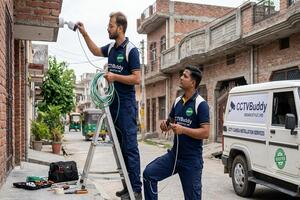
CCTV Installation Services can include several different activities depending on the size and complexity of the property.
A typical project may involve:
Not every customer will need all of these services.
A small home with a few cameras may have a relatively simple setup. A multi-floor office, warehouse, or commercial building can require considerably more planning because of longer cable routes, multiple network points, different mounting heights, and larger recording requirements.
For this reason, it is useful to understand what is actually included in a quotation instead of comparing only the final price.
The position of a camera can be just as important as the camera itself.
CCTV Camera Installation should consider the direction of movement, viewing distance, lighting conditions, mounting height, surrounding structures, and the area that the lens can actually cover.
For example, an entrance camera should ideally provide a useful view of people approaching or entering the property. A parking camera may need a wider view, while a camera near a billing counter may benefit from a more focused angle.
A camera can be working perfectly and still provide disappointing footage if its position has not been planned properly.
Glass doors, bright lights, pillars, trees, signboards, shelves, and other objects can affect visibility. A camera pointed directly toward strong sunlight can also produce an image where important details are difficult to see.
The objective should therefore be useful coverage rather than maximum camera count.
Blind spots are one of the most important issues to consider during planning.
A blind spot is an area that cannot be seen properly by the installed cameras. It may occur because of a wall, pillar, gate, parked vehicle, shelf, staircase, poor viewing angle, or simply because the camera has been placed too far away.
Common areas that deserve particular attention include:
Overlapping coverage can sometimes be useful. For example, a camera covering an entrance from one direction and another covering the same movement area from a different angle may provide better visibility than relying on one distant camera.
Camera height also matters.
Mounting a camera very high can provide a broad view but may make facial details less useful. Installing it too low can expose the equipment to accidental damage or tampering.
The right height depends on the property and the purpose of the camera.
A good planning approach is to imagine the footage before the camera is installed: If an important event happens here, will the camera actually capture the detail I need?
Homes have different requirements depending on their size, number of entrances, parking arrangement, surrounding access, and whether the property is an apartment or an independent house.
With Home CCTV Installation Services, the number and type of cameras can be selected according to the home's actual layout.
A small apartment might need only a few cameras around the entrance and parking area. A larger house may require additional coverage around the main gate, driveway, rear entrance, staircase, or side passage.
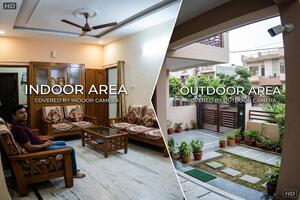
Some homeowners also choose indoor cameras for selected areas. These can be useful for monitoring children, pets, elderly family members, or specific rooms when appropriate.
However, indoor surveillance should always be planned carefully. Cameras should not be placed in areas where monitoring would be inappropriate, and access to footage should be limited to authorized users.
Mobile access is another feature many homeowners consider. Depending on the system, a compatible application may allow users to view live footage, review recordings, or receive selected alerts when they are away from home.
Commercial properties generally have more movement and more operational areas than residential buildings.
Commercial CCTV Installation Services can be planned for shops, offices, warehouses, workshops, restaurants, clinics, schools, showrooms, and other business premises.
The surveillance requirements should follow the way the business operates.
For example, a warehouse may need better visibility around loading bays and storage areas. A showroom may focus more on entrances, customer areas, and billing points. A restaurant may have different requirements from a manufacturing unit.
There is no universal camera arrangement that works for every business.
The better approach is to identify where people, vehicles, goods, and sensitive activities move through the property and then plan coverage around those points.
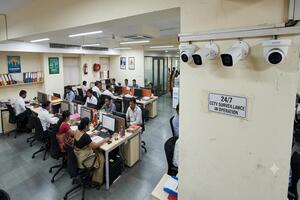
Office surveillance usually focuses on shared, operational, and access-controlled areas.
Office CCTV Installation may cover the reception area, main entrance, corridors, parking, server room, storage area, or other designated locations.
Cameras do not necessarily need to be installed in every workspace.
For example, an entrance camera can monitor people entering and leaving, while another camera may cover a restricted-access area. This can provide useful visibility without unnecessarily monitoring private working spaces.
Larger offices may also benefit from network-based systems where cameras, recording equipment, and authorized viewing devices can be managed centrally.
The final arrangement should take both security requirements and workplace privacy into account.
Retail stores often have a relatively small number of locations where camera coverage is particularly useful.
Shop CCTV Installation may focus on the entrance, billing counter, customer area, stock room, delivery point, or rear entrance.
Shelves and display racks need to be considered before the cameras are mounted. A camera that initially appears to provide a wide view may lose part of that coverage once customers, displays, or merchandise are in place.
Lighting is another important factor.
A camera facing a bright glass entrance may struggle to capture details inside the shop. Similarly, a poorly lit stock room may require a camera designed to perform better under low-light conditions.
The objective should be to capture useful footage rather than simply cover the maximum possible area.
Different CCTV cameras are suited to different environments.
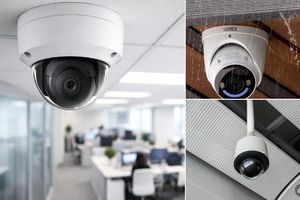
Dome Cameras
Dome cameras are commonly used indoors and can offer a relatively discreet appearance. They can be suitable for offices, shops, reception areas, corridors, and other indoor spaces.
Bullet Cameras
Bullet cameras are often used for outdoor areas such as gates, building exteriors, parking spaces, and boundary points. Their physical design can make them suitable for locations where a more directional view is required.
Turret Cameras
Turret cameras provide flexible positioning and are widely used in both indoor and outdoor applications. They can be a practical choice where the installer needs to adjust the viewing direction during setup.
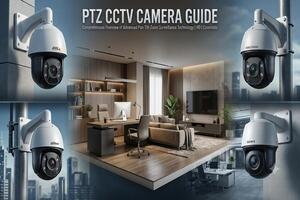
PTZ Cameras
PTZ cameras can pan, tilt, and zoom remotely. They can be useful for larger areas where active monitoring or the ability to change the viewing direction is important.
However, a PTZ camera should not automatically be considered a replacement for multiple fixed cameras. If an event occurs outside the direction in which the PTZ camera is currently looking, that moment may not be captured in the same way as it would by a fixed camera.
Smart Cameras
Smart cameras can offer features such as human detection, vehicle detection, motion alerts, line-crossing detection, and selected event notifications.
These features can reduce unnecessary alerts when they are configured correctly.
The important question is not whether a camera has the longest feature list. It is whether its features solve a real problem at the installation location.
Network cameras are widely used in offices, commercial buildings, warehouses, larger homes, and other properties where flexible monitoring is required.
IP Camera Installation Services involve connecting cameras through a network so that video can be transmitted to compatible recording and monitoring equipment.
One advantage of an IP system is scalability. Depending on the equipment and network design, additional cameras can be added later without completely replacing the existing system.
Power over Ethernet can also simplify some installations because compatible cameras can receive power and data through a single network cable.
However, IP surveillance requires proper network planning. The installer may need to consider:
For a small property, a simpler system may be sufficient. For larger premises, the flexibility of a network-based setup can be particularly useful.
Wireless cameras can be useful where running conventional cables is difficult or where selected areas need monitoring without extensive new cabling.
Wireless CCTV Camera Installation still requires careful planning.
Wireless does not always mean completely cable-free. Many cameras require a power connection, while video transmission depends on the wireless network.
Walls, floors, distance, interference, and the location of the Wi-Fi access point can affect performance.
Wireless cameras may therefore be a practical choice for suitable locations, but they should not be selected simply because they appear easier to install.
The strength and reliability of the network should be checked before finalizing the system.
A camera that works well during the day may produce very different results after sunset.
Many modern cameras support infrared night vision, while others use low-light sensors or additional illumination.
The actual night-time image depends on several factors, including:
For areas such as gates, driveways, parking spaces, and building entrances, night performance should be considered before choosing the camera.
Sometimes suitable lighting can improve visibility significantly. Simply choosing a camera with a higher advertised night-vision range does not guarantee that every part of the scene will be equally clear.
Video remains the primary purpose of most surveillance systems, but cameras with microphones and two-way audio have become increasingly common.
Audio can provide additional context in locations where sound recording is appropriate. Two-way communication can also allow users to communicate with someone near the camera.
For example, a homeowner may use a compatible camera at an entrance to speak with a visitor without opening the door.
Businesses may also find two-way communication useful in selected reception or access-control situations.
However, audio should be considered separately from video because recording conversations can involve additional privacy considerations depending on where the camera is installed and how the system is used.
The feature should therefore be selected for a genuine requirement rather than simply because the camera specification includes it.
Modern surveillance systems can do more than continuously record video.
Depending on the model, they may identify people or vehicles, detect movement in selected zones, send alerts, or make it easier to locate particular events in recorded footage.
The quality of these features depends heavily on configuration.
Consider a camera positioned near a property entrance beside a busy road. If the detection area includes the road, passing vehicles may generate unnecessary alerts.
Reducing the detection zone to the actual entrance can make notifications more useful.
Similarly, a camera inside a shop may need different detection settings from a camera covering an outdoor gate.
Smart features are most valuable when they are configured around the environment instead of being left on generic default settings.
Installation prices can vary significantly between properties.
The CCTV Camera Installation Charges in Gaya can depend on the number and type of cameras, cable length, mounting height, property layout, recording equipment, network requirements, existing infrastructure, and the complexity of the work.
A small installation may involve only basic mounting and configuration. A larger project could require extensive cabling, concealed wiring, network equipment, elevated installation, or additional testing.
Indicative Installation Cost
| Installation requirement | Approximate service range |
| 1 camera – basic installation | ₹500–₹1,000 |
| 2 cameras – basic installation | ₹900–₹1,800 |
| 4 cameras – standard installation | ₹1,800–₹3,500 |
| 6 cameras – standard installation | ₹2,700–₹5,000 |
| 8 cameras – standard installation | ₹3,500–₹6,500 |
| IP camera installation | ₹700–₹1,500 per camera |
| Wireless camera setup | ₹500–₹1,200 per camera |
| DVR/NVR installation and configuration | ₹1,000–₹3,000 |
| Mobile/remote viewing configuration | ₹500–₹1,500 |
| Additional or concealed cabling | Depends on site requirements |
| High-height or difficult-access installation | Additional charges may apply |
These figures are indicative service ranges, not fixed nationwide prices. Actual charges can vary by city, camera model, property layout, cable length, installation height, existing infrastructure, and service provider. Equipment costs may be quoted separately.
A basic installation and a complicated installation should not be expected to cost the same.
Additional work may be required when:
This is why customers should ask for a clear scope of work rather than comparing only the headline installation price.
Before approving a quotation, check whether it includes the complete requirement or only installation labour.
Depending on the project, the quotation may need to mention:
Two quotations can look very different because one may include equipment and configuration while another may cover only installation.
Comparing the scope line by line gives a much clearer picture of the actual cost.
People often begin with searches such as CCTV Installation Near Me because they want someone who can visit the property and provide local support.
A nearby installer can be convenient, particularly when a site inspection is required or when future servicing may be necessary.
However, distance should not be the only consideration.
Look at the installer's experience, the types of systems they work with, the clarity of their quotation, the installation process, warranty terms, and the support available after the work is completed.
For a larger project, it is also useful to confirm whether the installer can handle the complete system rather than only the physical mounting of cameras.
A search for CCTV Camera Installation Near Me can produce many options, but customers should compare the service rather than simply selecting the first result.
Before confirming the work, ask:
These questions help establish what the customer is actually paying for.
The experience of CCTV Camera Installers becomes particularly important when the property has multiple floors, long cable routes, difficult mounting points, outdoor locations, or several monitoring zones.
An experienced installer can identify practical issues before the equipment is permanently fixed.
For example, a proposed camera location may appear suitable during the initial inspection but produce glare at certain times of the day. A small change in position may provide considerably better footage without adding another camera.
The installer should also check the final viewing angle after mounting.
A camera should not simply be installed and left at its initial angle. The image should be reviewed from the actual recording system to confirm that the intended area is visible.
When comparing a CCTV Installation Company in Gaya, look beyond the equipment brand and installation price.
A suitable company should be able to explain the proposed system, camera locations, recording arrangement, storage capacity, network requirements, and future expansion options in clear language.
This becomes particularly important for larger offices, warehouses, schools, factories, apartment complexes, and commercial buildings.
It is also worth considering what happens after installation.
A surveillance system may eventually need additional cameras, storage upgrades, troubleshooting, configuration changes, or replacement of damaged components. Knowing how support is handled can make the overall arrangement easier to manage.
A CCTV system should not be treated as something that can be completely forgotten after installation.
Outdoor cameras may collect dust or dirt on their protective covers. Connectors and exposed cables can require inspection, particularly in areas affected by weather.
It is also worth checking periodically that every camera is recording properly.
The recording device should have sufficient storage, while the date and time should remain accurate so that specific footage can be located when needed.
For systems connected to the internet, account access should also be managed carefully. Strong passwords and controlled user access can reduce the risk of unauthorized viewing.
Regular basic checks can identify simple problems before they affect an important recording.
A well-planned project can generally be organized into four broad stages.
1. Understand the Property
The requirement is discussed first. Important areas, entrances, night-time visibility, remote access, and any special concerns are identified.
2. Plan the Coverage
Camera locations, viewing angles, cabling, recording equipment, storage, power, and network requirements are considered.
3. Install and Configure
Cameras are mounted, connections are completed, and the recording and network equipment is configured.
4. Test the Complete System
The cameras are checked for image quality, viewing angle, recording, playback, connectivity, and remote access where applicable.
The customer should also be shown the basic functions of the recorder and mobile application so that the system can be used confidently.
There is no universal CCTV setup that is right for every customer.
A small home may need only a few cameras around the entrance and parking area. A retail store may require better visibility around the billing counter and entrance. An office may need coverage across several floors, while a warehouse may require wider views around loading areas and storage zones.
The requirement should determine the system.
Once the important areas are identified, it becomes easier to decide whether the property needs fixed cameras, IP cameras, wireless equipment, smart detection, audio, remote viewing, or a combination of different technologies.
This approach also helps prevent unnecessary spending on features that may never be used.
How many cameras does a property need?
There is no standard number. It depends on the property's layout, entrances, blind spots, important areas, and the level of detail required.
Can CCTV footage be viewed on a mobile phone?
Many modern systems support remote viewing through compatible applications. The exact functionality depends on the camera or recorder, internet connection, software, and configuration.
Are wireless cameras suitable for homes?
They can be useful where reliable wireless coverage and suitable power are available. The network should be checked before choosing this type of system.
How long can CCTV footage be stored?
Storage duration depends on the number of cameras, resolution, frame rate, compression, recording mode, and hard-drive capacity.
Will CCTV work at night?
Many cameras support infrared or low-light recording. However, the final quality depends on the camera sensor, surrounding light, distance, viewing angle, and installation position.
Is professional installation necessary?
For a very simple setup, some customers may choose to install equipment themselves. However, professional help can be particularly useful when the system involves multiple cameras, concealed cabling, networking, elevated mounting, recording equipment, or complicated viewing requirements.
A CCTV system does not become better simply because it contains more cameras or more features.
The most useful setup is one that covers the important areas, produces usable footage in the conditions where it is needed, stores recordings for an appropriate period, and remains easy to operate.
Start by identifying the areas that require visibility. Then consider camera type, viewing angle, lighting, night performance, recording capacity, network requirements, and future expansion.
For larger or more complicated properties, Professional CCTV Installation Services can help ensure that cameras, cabling, recording equipment, and network components are properly planned and configured.
When comparing a CCTV Installation Services Provider, consider the complete service rather than focusing only on the initial price. Clear camera placement, appropriate equipment, proper configuration, testing, warranty, and after-sales support can all influence the usefulness of the finished system.
A well-planned CCTV setup should ultimately do one simple thing well: give you useful visibility of the places that matter, when you need it.